Please note: This concert is in the past and has already taken place.

Marta Falcman

Music by Vivaldi/Bach, Debussy & Schumann

Part of the Holy Trinity Church Coventry - Free Saturday Lunchtime Recital Autumn Series 2019

Add to my Calendar 30-11-2019 13:00 30-11-2019 15:00 36 Marta Falcman Bach’s concerto transcriptions date from his second period at the court in Weimar (1708–1717). Bach transcribed for organ and harpsichord a number of concertos, mainly by Vivaldi. This concerto is an arrangment of concerto Op.3 no.9 by A. Vivaldi (1678-1741). It is thought that most of the transcriptions were probably made in 1713–1714. Their publication by Peters in the 1850s and by Breitkopf & Härtel in the 1890s played a decisive role in the Vivaldi revival of the twentieth century. The French impressionist, Debussy, started to compose Suite Bergamasque in 1890 at the age of 28, as he struggled to make ends meet in what was considered his more Bohemian period. He finally finished writing it 15 years later. It was within the inspirational poem 'Clair de Lune' by his friend, Paul Verlaine, that the composer found the seeds of the complete work’s title. Verlaine writes of 'your souls ... like landscapes, charming masks and bergamasks, playing the lute and dancing, almost sad in their fantastic disguises'. The bergamask, reputedly a clumsy dance performed originally by natives of Bergamo, becomes the beautiful 'bergamasque' in French. Robert Schumann’s Sonata Opus 11 is intimately connected with Clara Wieck. It was completed in August 1835, dedicated to Clara under the names of Florestan and Eusebius, his imaginary friends, figures that respectively represented the more turbulent and more reflective sides of his character. The work was sent to Clara in May 1836, but her father forbade acknowledgement of it, putting an end to any open correspondence between Schumann and his daughter, who soon found means to resume secret contact with the composer. The sonata opens with an Introduction, marked un poco adagio. The right hand plays a melody above an accompanying triplet bass, with rôles reversed, as theme is introduced that will return in the second movement. The following Allegro vivace begins with a version of Clara’s Scène Fantastique: Le ballet des revenants, Opus 5, No. 4, leading to Schumann’s own Fandango of 1832, the two themes on which the sonata-form movement is based. The 2nd movement, Aria, has the added direction senza passione, ma espressivo. This is taken from Schumann’s song An Anna II, one of a group of settings of poems by Justinus Kerner from 1828. The Scherzo follows the uneven rhythmic figuration of the opening bars with chords characteristic of Schumann’s piano writing. In contrast to this is the Intermezzo, which has the direction alla burla, ma pomposo. The transition back to the Scherzo is achieved through a recitative in the lower register and a melodic fragment marked quasi Oboe. The 4th movement is in sonata-rondo form, with a multiplicity of ideas in which Eusebius occasionally interrupts Florestan, until the final virtuosic coda.   Marta Felcman is renowned for a vast repertoire that ranges from Bach to Rorem and includes composers from her native Argentina. Her concerts are ambitious, exciting, and revelatory. “A major artist!” proclaims Laurence Vittes, music critic of Gramophone Magazine. “A pianist [of] the “greatest musical sophistication,” wrote The Washington Post. “One of the finest recitals in this writer’s memory…Power and dexterity…pure musical enjoyment,” reported The Richmond (VA) Times-Dispatch. Il Tempo in Rome praised her performance as “…brilliant and poetic! The concert ended with tumultuous applause.” Marta has appeared in recitals and with orchestras in the Salon Dorado of the Teatro Colon in Buenos Aires, Musikverein in Vienna, Summer Festival in Toulouse, Weill Recital Hall at Carnegie Hall, the Bach Festival in Philadelphia, Herbst Theater in San Francisco, Los Angeles County Museum of Art, Virginia Museum of Fine Arts in Richmond, Corcoran Gallery and The National Gallery of Art in Washington, DC, and in many other halls and universities, among them: Yale, Rutgers, Hofstra, Wesleyan, and Texas. Her début CD includes works by Scarlatti, Bach/Busoni, Guastavino, Schumann and Ned Rorem, who wrote: “not only my piece, but all the others, are played with care, understanding and prowess.” Her Schumann CD on the Eroica label has received accolades for her passionate and sensitive interpretations. Renowned British pianist Peter Katin said: “Her Schumann has to be one of the most imaginative performances I have heard.” And Bill Rosen, music critic, wrote: “Marta Felcman’s dashing romantic spirit and splendid virtuosity…announced her as a significant pianist with the fire of Argerich and the discipline of Kissin.” Marta started piano studies at the age of four with Hubert Brandenburg and later with Hebe Brandenburg in her native Argentina. She was influenced by a succession of distinguished teachers, most notably Hans Graf at the Musikhochschule in Vienna, Peter Katin, Rosalyn Tureck, and Eteri Andjaparidze. Continuing that tradition, she also gives master classes. Marta was invited to perform at the McLean, Virginia home of Senator Edward Kennedy to honour Raul Alfonsin, the former Argentine President, Champion of Human Rights. She has donated numerous performances in benefit concerts and is committed to fostering children’s musical education. Born in Buenos Aires, Marta Felcman has lived in New York City since 1983. An avid runner, she jogs in Central Park and, when touring, brings her running shoes along with her repertoire.Holy Trinity Coventry Pipe Organ Appeal. Holy Trinity Church, Coventry DD/MM/YYYY

Details

Holy Trinity Church
5A Priory Row
Coventry
West Midlands
CV1 5EX
England


Programme

Johann Sebastian BachConcerto in D major for keyboard, BWV 972
Claude DebussySuite Bergamasque
Robert SchumannPiano Sonata no.1 in F sharp minor, Op.11

Performers

Marta Falcman – piano

Other concerts in this Series (+)

Programme Note

Bach’s concerto transcriptions date from his second period at the court in Weimar (1708–1717). Bach transcribed for organ and harpsichord a number of concertos, mainly by Vivaldi. This concerto is an arrangment of concerto Op.3 no.9 by A. Vivaldi (1678-1741). It is thought that most of the transcriptions were probably made in 1713–1714. Their publication by Peters in the 1850s and by Breitkopf & Härtel in the 1890s played a decisive role in the Vivaldi revival of the twentieth century.

The French impressionist, Debussy, started to compose Suite Bergamasque in 1890 at the age of 28, as he struggled to make ends meet in what was considered his more Bohemian period. He finally finished writing it 15 years later. It was within the inspirational poem 'Clair de Lune' by his friend, Paul Verlaine, that the composer found the seeds of the complete work’s title. Verlaine writes of 'your souls ... like landscapes, charming masks and bergamasks, playing the lute and dancing, almost sad in their fantastic disguises'. The bergamask, reputedly a clumsy dance performed originally by natives of Bergamo, becomes the beautiful 'bergamasque' in French.

Robert Schumann’s Sonata Opus 11 is intimately connected with Clara Wieck. It was completed in August 1835, dedicated to Clara under the names of Florestan and Eusebius, his imaginary friends, figures that respectively represented the more turbulent and more reflective sides of his character. The work was sent to Clara in May 1836, but her father forbade acknowledgement of it, putting an end to any open correspondence between Schumann and his daughter, who soon found means to resume secret contact with the composer.

The sonata opens with an Introduction, marked un poco adagio. The right hand plays a melody above an accompanying triplet bass, with rôles reversed, as theme is introduced that will return in the second movement. The following Allegro vivace begins with a version of Clara’s Scène Fantastique: Le ballet des revenants, Opus 5, No. 4, leading to Schumann’s own Fandango of 1832, the two themes on which the sonata-form movement is based. The 2nd movement, Aria, has the added direction senza passione, ma espressivo. This is taken from Schumann’s song An Anna II, one of a group of settings of poems by Justinus Kerner from 1828. The Scherzo follows the uneven rhythmic figuration of the opening bars with chords characteristic of Schumann’s piano writing. In contrast to this is the Intermezzo, which has the direction alla burla, ma pomposo. The transition back to the Scherzo is achieved through a recitative in the lower register and a melodic fragment marked quasi Oboe. The 4th movement is in sonata-rondo form, with a multiplicity of ideas in which Eusebius occasionally interrupts Florestan, until the final virtuosic coda.


Marta Felcman is renowned for a vast repertoire that ranges from Bach to Rorem and includes composers from her native Argentina. Her concerts are ambitious, exciting, and revelatory. “A major artist!” proclaims Laurence Vittes, music critic of Gramophone Magazine. “A pianist [of] the “greatest musical sophistication,” wrote The Washington Post. “One of the finest recitals in this writer’s memory…Power and dexterity…pure musical enjoyment,” reported The Richmond (VA) Times-Dispatch. Il Tempo in Rome praised her performance as “…brilliant and poetic! The concert ended with tumultuous applause.”

Marta has appeared in recitals and with orchestras in the Salon Dorado of the Teatro Colon in Buenos Aires, Musikverein in Vienna, Summer Festival in Toulouse, Weill Recital Hall at Carnegie Hall, the Bach Festival in Philadelphia, Herbst Theater in San Francisco, Los Angeles County Museum of Art, Virginia Museum of Fine Arts in Richmond, Corcoran Gallery and The National Gallery of Art in Washington, DC, and in many other halls and universities, among them: Yale, Rutgers, Hofstra, Wesleyan, and Texas.

Her début CD includes works by Scarlatti, Bach/Busoni, Guastavino, Schumann and Ned Rorem,

who wrote: “not only my piece, but all the others, are played with care, understanding and prowess.”

Her Schumann CD on the Eroica label has received accolades for her passionate and sensitive

interpretations. Renowned British pianist Peter Katin said: “Her Schumann has to be one of the most

imaginative performances I have heard.” And Bill Rosen, music critic, wrote: “Marta Felcman’s

dashing romantic spirit and splendid virtuosity…announced her as a significant pianist with the fire

of Argerich and the discipline of Kissin.”

Marta started piano studies at the age of four with Hubert Brandenburg and later with Hebe

Brandenburg in her native Argentina. She was influenced by a succession of distinguished teachers, most notably Hans Graf at the Musikhochschule in Vienna, Peter Katin, Rosalyn Tureck, and Eteri Andjaparidze. Continuing that tradition, she also gives master classes. Marta was invited to perform at the McLean, Virginia home of Senator Edward Kennedy to honour Raul Alfonsin, the former Argentine President, Champion of Human Rights. She has donated numerous performances in benefit concerts and is committed to fostering children’s musical education.

Born in Buenos Aires, Marta Felcman has lived in New York City since 1983. An avid runner, she jogs

in Central Park and, when touring, brings her running shoes along with her repertoire.

Holy Trinity Coventry Pipe Organ Appeal.
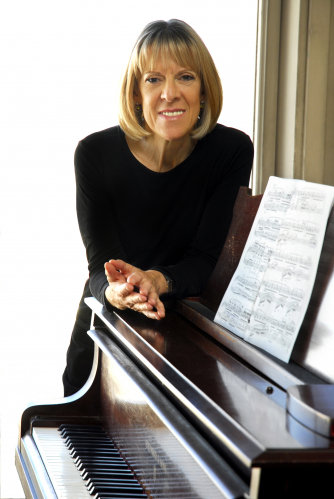
Marta Felcman

Get a route map

Your Map

If you have any questions, please contact us using the form below, or send an e-mail to [email protected].

All form fields are required.

Please check your details and try again.

Thank you for contacting us. We will contact you regarding your enquiry as soon as possible.