 Your events at Classical Events


Details
Sir Jack Lyons Concert Hall
University of York
York
YO10 5DD
England
Tickets
Prices: £10.00-£30.00
Booking line: 01904 322439
Book Tickets
Programme
Ludwig van Beethoven – Piano Sonata no.32 in C minor, Op.111
Ludwig van Beethoven – Piano Sonata no.21 in C major 'Waldstein', Op.53
Wolfgang Amadeus Mozart – Piano Sonata no.4 in E-flat major, K.282/189g
Wolfgang Amadeus Mozart – Piano Sonata no.8 in A minor, K.310/300d
Performers
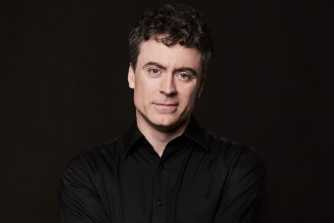
Paul Lewis – piano
Other concerts in this Series (+)
Programme Note
Paul Lewis is internationally regarded as one of the leading musicians of his generation. His award-winning cycle of Beethoven’s piano sonatas has received unanimous critical and public acclaim worldwide and consolidated his reputation as one of the composer’s foremost interpreters. His distinguished career has earned him numerous prestigious awards, including the Royal Philharmonic Society’s Instrumentalist of the Year, two Edison Awards, three Gramophone Awards and the Diapason d’or. As we mark the bicentenary of Beethoven’s death in 2027, the celebrated British pianist presents a programme pairing two of his groundbreaking sonatas with a contrasting pair of works by Mozart: his serene Fourth Sonata and tragic Eighth Sonata. These pieces are linked by key, with the Mozart sonatas set in the relative major and minor of their Beethoven counterparts.
Beethoven’s ‘Waldstein’ Sonata is a cornerstone of his ‘Heroic’ decade. Composed around the same time as the groundbreaking ‘Eroica’ Symphony, it shares that masterwork’s monumental scale and surging energy. As one of Beethoven’s most virtuosic piano sonatas, the work introduces unprecedented technical challenges that test the very limits of the instrument and the performer. With its orchestral textures and grand scale, the ‘Waldstein’ Sonata helped elevate the piano sonata from a genre intended for intimate salon gatherings to one that demands performance in a public concert hall. It is no surprise, then, that early Beethoven biographer Wilhelm Lenz aptly described the work as a ‘heroic symphony for piano’.
As with Opus 53, Beethoven’s final Piano Sonata pushed both the technical abilities of the performer and the physical boundaries of the instrument. Deeply frustrated by the tonal constraints of the keyboard instruments of his time, Beethoven remarked after its completion that the piano was, ‘after all, an unsatisfactory instrument’. Composing in a state of complete deafness, Beethoven was arguably writing for a future instrument that existed only in his mind – one capable of supporting the immense, sustained lyricism he demanded. The Sonata’s unusual two-movement structure offers a journey of profound contrasts, reflecting the arc of this programme as a whole. It moves from the dark, turbulent, earthly struggle of the C-minor first movement to the transcendent, heavenly peace of the C-major second movement.
‘There are many prized recordings of the Beethoven sonatas from past masters and current artists. But if I had to recommend a single complete set, I would suggest Mr Lewis’s distinguished recordings’ (Anthony Tommasini, New York Times)