 Your events at Classical Events


Details
Rymer Auditorium
School of Arts and Creative Technologies (Music)
University of York
York
YO10 5DD
England
Programme
Guillaume de Machaut – Le Remède de Fortune
Performers
Loré Lixenberg – voice
Other concerts in this Series (+)
Programme Note
Notre Dame Reimagined is an ambitious project that invites audiences to encounter the famous cathedral's music, iconography and architecture afresh. Rather than reconstructing a lost sound world, it asks what happens when Notre Dame's medieval musical traditions are placed in dialogue with AI, spatial sound and historically informed contemporary performance.
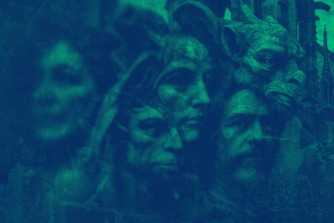
At the heart of the project are immersive performances in which musicians' actions become live inputs to AI models trained on rich visual and sonic archives from the cathedral. Images of architectural features, stained glass, sculpture and paintings, together with recordings of Notre Dame School polyphony, form the basis for generative AI systems that respond in real time. Voices bloom into chant and polyphony within virtual acoustics, while architectural details and iconography appear, dissolve and transform as AI-generated visuals. Audiences are drawn into the cathedral's legacy, experiencing it not as a monument of the past but as a site of ongoing transformation and innovation.
The programme centres on Guillaume de Machaut's Le Remède de Fortune, a long narrative poem with embedded songs that stands as one of the defining works of fourteenth-century courtly culture. A young poet, convinced he has broken faith with his beloved Lady Fortune, spirals into panic before encountering Lady Hope, who offers not rescue but instruction. Machaut traces this journey through a sequence of fixed forms – laments, dances and intricate polyphonic textures – each demanding a finely judged balance of musical detail and emotional insight.
In this performance, courtly love – so often mistakenly framed as an entirely European invention – is heard through echoes of al-Andalus and the Islamic poetic and musical thought that helped to shape it. The oud enters not as embellishment but as a reminder that fourteenth-century France existed within a wider musical and cultural landscape. Its sound threads through Machaut's lines in ways that feel less like commentary and more like recognition, revealing Arabic influences in the music of Notre Dame. The interplay of voice and oud, AI-generated sound and visuals and immersive spatial acoustics together extend the piece's geometry.